
Mahr in Canada: Common Amounts and What the Law Says
Published November 2, 2026
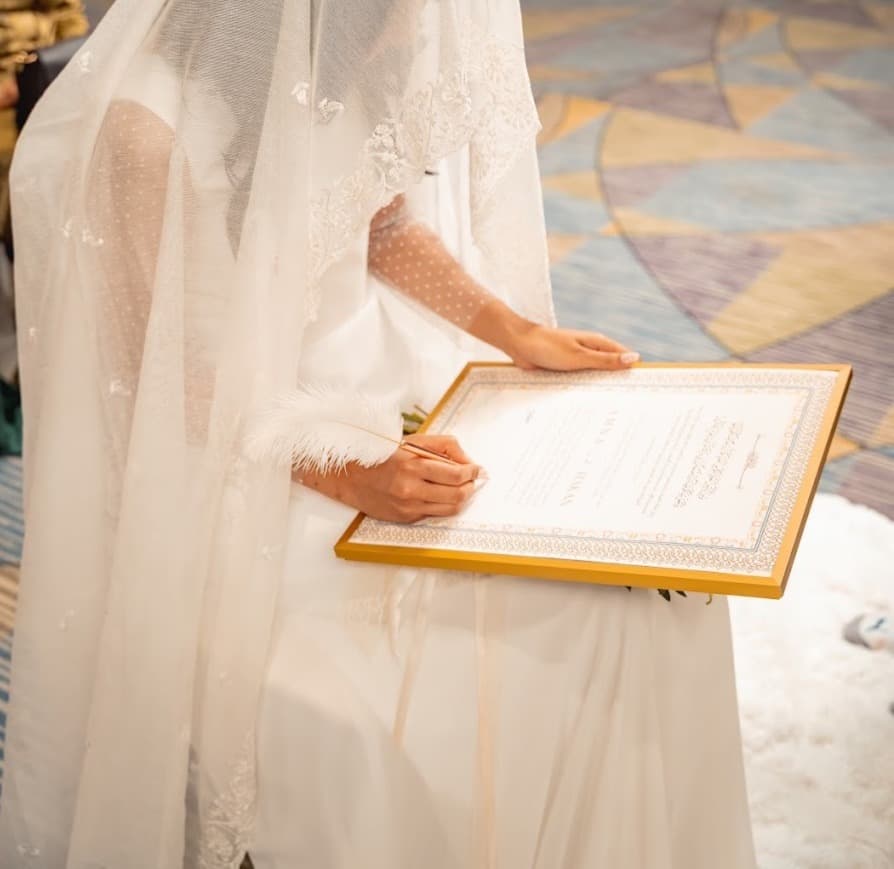
The mahr is one of the first things families discuss when planning a nikah, and one of the most common questions we hear is how much it should be. There is no single answer, and we will not invent an average. This guide explains what the mahr is, the ways couples in Canada usually decide on it, and how some Canadian courts have treated a mahr when a marriage ends. It is general information, not legal advice or a religious ruling.
What is the mahr?
The mahr is a gift the groom gives to the bride as part of the nikah. It belongs to her alone. It is not a payment to her family, and it is not a dowry in the sense of something the bride's family gives to the groom.
Scholars widely teach that the mahr is a right of the wife and an obligation in the marriage contract. There is no fixed amount in Islam. Some schools are commonly taught to set a small minimum, but none sets a maximum. What matters most is that the bride agrees to it freely and the groom can honestly pay it.
Prompt and deferred mahr
Many couples split the mahr into two parts.
The prompt part, often called muqaddam or mu'ajjal, is given at or soon after the nikah. The deferred part, often called mu'akhar or muwajjal, is a debt the husband owes the wife. It is commonly made payable on her request, on a set date, or if the marriage ends by divorce or death.
Couples choose the split that suits them. Some give the whole mahr at the nikah. Others defer most of it. Whatever you choose, write down exactly what is prompt, what is deferred, and when the deferred part becomes due.
How couples choose an amount
Families in Canada usually reach a mahr in one of a few ways. None is more correct than the others, and many couples combine them.
- A symbolic mahr. Some couples choose a modest, meaningful amount. Many scholars mention hadith that praise an easy mahr.
- Mahr Fatimi. This is the mahr associated with the marriage of Fatimah, the Prophet's daughter, commonly cited as 500 silver dirhams. Our calculator treats it as about 1,487.5 grams of silver. Other sources give slightly different gram figures, and the dollar value changes with the silver price.
- Gold or jewellery. Some families set the mahr as gold coins, a set weight of gold, or a piece of jewellery.
- A cash amount. Many couples simply agree a sum in Canadian dollars based on the groom's means and the bride's wishes.
- Something other than money. Scholars widely accept a mahr of real value that is not cash, such as a copy of the Quran, the cost of Hajj or Umrah, or paying for the bride's studies. Ask your imam if you are unsure whether something counts.
Use the mahr calculator
If you are not sure where to start, try our free mahr calculator at /mahr-calculator. You can enter an amount you already have in mind, use a share of the groom's yearly income as a rough guide, or use the silver standard based on Mahr Fatimi. Enter today's silver price in Canadian dollars per gram for an up to date figure.
The calculator then lets you split the total into prompt and deferred parts. It is a starting point for an honest family conversation, not a ruling on what your mahr should be.
Is a mahr enforceable in Canada?
There is no single Canadian rule. Family property law is mostly provincial, and courts have reached different results depending on how the mahr was written and the facts. Here are four real decisions, all available on CanLII.
Kaddoura v. Hammoud (Ontario Court (General Division), 1998). A wife claimed a $30,000 deferred mahr. The judge held that the claim was not a matter that could be decided in the civil courts, because deciding it would lead the court into what he called the religious thicket. Her claim for the mahr was dismissed.
Amlani v. Hirani (Supreme Court of British Columbia, 2000). The court held that a marriage contract signed during the couple's religious wedding ceremony, which included a mahr, was a marriage agreement under British Columbia's Family Relations Act, the family law statute in force at the time.
Khamis v. Noormohamed (Court of Appeal for Ontario, 2011 ONCA 127). The trial judge found a $20,000 mahr valid and enforceable. The contract was in writing, signed by both spouses and witnessed, and the husband understood that his promise was binding. The Court of Appeal agreed. Because the contract said the mahr was in addition to the husband's obligations under the laws of the land, it was also kept outside the equalization of family property.
Bakhshi v. Hosseinzadeh (Court of Appeal for Ontario, 2017 ONCA 838). The court upheld the finding that a mahr of 230 gold coins, signed in Iran, was a valid marriage contract. It said courts treat a mahr like any other contract and enforce only what meets the provincial rules for a domestic contract. But this mahr had no wording like the one in Khamis, so the court held it must be counted in the equalization of family property like any other debt between spouses. Small differences in wording changed the result.
Ontario's rules for a written agreement
In Ontario, a marriage contract is a type of domestic contract under the Family Law Act. Section 52 allows two people who are married or intend to marry to agree on their rights and obligations, including property and support. Section 55 says a domestic contract is unenforceable unless it is made in writing, signed by the parties and witnessed.
Section 56(4) lets a court set aside a domestic contract or a part of it, for example if a party failed to disclose significant assets or debts, did not understand the nature or consequences of the contract, or otherwise under the law of contract. Other provinces have their own rules, and the cases above are from Ontario and British Columbia only.
Practical steps many lawyers suggest include:
- Write the mahr down clearly, with the exact amount or item.
- Say what is prompt and what is deferred, and when the deferred part is due.
- Use a language both spouses understand, or attach a translation.
- Have both spouses sign and date it, with witnesses, and keep copies.
- If you want the mahr to sit outside, or inside, the division of family property, say so in plain words.
- If the amount is large or your situation is complex, ask a family lawyer in your province to review it before the nikah.
A few common questions
How much mahr should I give?
What is the average mahr in Canada?
What is Mahr Fatimi in grams of silver?
Is mahr enforceable in Canada?
Is the mahr part of property division on divorce in Ontario?
Planning your nikah?
Request an imam through ImamConnect, a free matching service, and use our mahr calculator at /mahr-calculator to start the conversation with your family before the nikah.
Related guides
This guide is general information, not legal advice or a religious ruling. Laws and fees change and differ by province and city, so confirm the current rules with your municipal office, your imam, and where it matters, a qualified lawyer.